

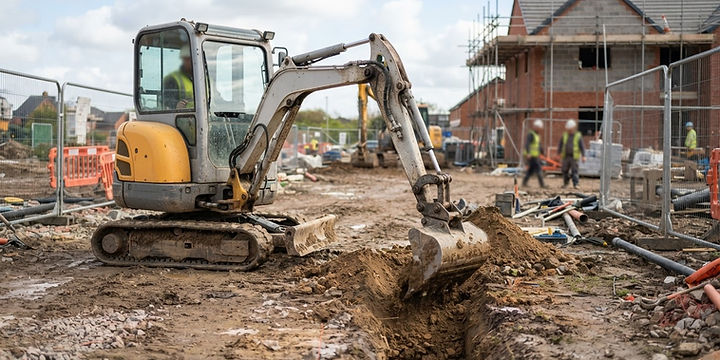
Many businesses look for growth by adding equipment, people or facilities, yet existing capacity can often deliver more value before further investment is needed. Operational utilisation improvement focuses on finding that hidden capacity and removing the barriers that prevent resources from being productive.
For equipment hire, car hire, asset rental, engineering and field service organisations, utilisation can be affected by asset turnaround, scheduling, maintenance, travel, administration and workload allocation. Small losses repeated across a fleet or workforce can become a significant commercial issue.
The opportunity is to improve how existing resources are deployed, available and productive without compromising service quality.
Where We Bring the Deepest Experience
Our 35 years in equipment hire, rental, engineering and field service has shown us how much commercial value can be hidden in existing assets, people, facilities and capacity.We understand the operational realities that influence utilisation.
A vehicle can lose several billable days because inspection and preparation are not coordinated closely enough after return.
An engineering team may have sufficient weekly capacity but lose productive hours through inefficient travel sequencing and late changes to job allocation.
A busy depot may still have unused capacity because equipment is not positioned or prepared according to expected demand.
Understanding these operational realities allows businesses to uncover hidden capacity and improve performance without increasing costs.
What We Assess
A comprehensive utilisation review typically examines:
1. Fleet and asset utilisation
2. Workforce productivity and capacity
3. Depot and operational efficiency
4. Scheduling and planning processes
5. Asset turnaround times
6. Resource allocation practices
7. System visibility and reporting
8. Performance measurement and accountability
The goal is to identify where value is being lost and how existing resources can deliver greater results.
Why Utilisation Challenges Occur
Limited Operational Visibility
Many businesses lack accurate visibility of how resources are being used.
Without reliable information, underutilisation often remains hidden.
Leaders may assume capacity is fully used when opportunities for improvement still exist.
Inefficient Scheduling
Poor scheduling can leave assets and employees waiting unnecessarily.
Small scheduling inefficiencies repeated across multiple locations and teams can have a significant impact on utilisation.
Delays in Operational Processes
Inspection delays, maintenance backlogs, approval bottlenecks and communication gaps can reduce the availability of valuable resources.
When assets are unavailable longer than necessary, utilisation suffers.
Reactive Decision-Making
Businesses operating in a constant state of firefighting often struggle to optimise resource usage.
Reactive management makes it difficult to identify and address underlying utilisation challenges.
The Benefits of Improving Utilisation
Increased Revenue Without Additional Investment
One of the greatest advantages of improved utilisation is the ability to generate more value from existing assets and resources.
Higher utilisation often increases revenue without requiring significant capital expenditure.
Improved Productivity
When resources are used more effectively, teams accomplish more with the same workforce and infrastructure.
Better Asset Performance
Improved utilisation helps maximise the return on investment from equipment, vehicles and operational assets.
Reduced Operating Costs
Better planning and resource allocation reduce waste, minimise downtime and improve operational efficiency.
Stronger Competitive Advantage
Businesses that consistently achieve higher utilisation levels often operate more efficiently and respond more effectively to customer demand.
Common Areas for Improvement
Fleet Availability
Many organisations discover that fleet availability is lower than expected because assets spend excessive time awaiting inspection, maintenance or allocation.
Improving these processes can increase utilisation without expanding the fleet.
Workforce Productivity
Employees may lose valuable time through inefficient workflows, duplicated effort or unnecessary administrative tasks.
Removing these barriers improves utilisation and productivity.
Depot Operations
Poor depot organisation, unclear responsibilities and inefficient processes can reduce operational throughput.
Improving operational flow often increases resource utilisation significantly.
Scheduling and Resource Allocation
Effective scheduling ensures assets and people are deployed where they create the greatest value.
Improved planning reduces idle time and improves operational performance.
Data and Reporting
Reliable utilisation data helps leaders identify trends, measure performance and make better operational decisions.
How We Improve Operational Utilisation
Understanding Current Performance
The first step is understanding how resources are currently being used.
We review operational data, workflows and resource allocation practices to establish a clear baseline.
This creates visibility into current performance levels.
Identifying Lost Capacity
Many businesses have hidden capacity within existing operations.
We identify where time, assets and resources are being lost through:
• Delays
• Downtime
• Inefficient scheduling
• Poor communication
• Manual processes
• Unclear accountability
Understanding these issues creates opportunities for improvement.
Addressing Root Causes
Rather than focusing solely on utilisation figures, we investigate why performance gaps exist. Questions often include:
• Why are assets unavailable?
• Why is productivity lower than expected?• Why are resources underutilised?
• What operational barriers are limiting performance?
Solving these root causes delivers sustainable improvements.
Developing Practical Improvement Plans
Recommendations may include:
1. Improving scheduling processes
2. Reducing asset turnaround times
3. Enhancing workforce planning
4. Strengthening performance reporting
5. Improving workflow efficiency
6. Clarifying operational ownership
7. Increasing system visibility
8. Removing unnecessary manual activities
The focus is always on practical and measurable business improvement.
Implementation Alongside Your Team
Performance improvement requires more than analysis.
We work alongside operational teams to ensure recommendations are implemented effectively and embedded into daily operations.
Regular huddles, performance reviews and progress tracking help maintain focus and create accountability.
This approach ensures improvements become part of how the business operates rather than remaining theoretical recommendations.
Building a Culture of Continuous Improvement
The most successful organisations view utilisation improvement as an ongoing process rather than a one-time project.
Teams need visibility into performance.
Managers need meaningful operational metrics.
Leaders need confidence that resources are being used effectively.
Creating a culture of continuous improvement helps sustain utilisation gains over the long term.
Once those relationships are visible, improvement can focus on the specific operational barriers that are preventing existing resources from delivering their full potential.
Operational teams need visibility of immediate constraints. Managers need trends across workloads, availability and downtime.
Leadership needs to understand how utilisation affects revenue, cost and capital requirements.
Utilisation improvement starts with understanding where capacity is being lost. That requires more than a headline utilisation percentage; managers need to know why assets, people or facilities are unavailable or unproductive
Turning Hidden Capacity Into Usable Capacity
Utilisation improvement starts with understanding where capacity is being lost. That requires more than a headline utilisation percentage; managers need to know why assets, people or facilities are unavailable or unproductive.
Operational teams need visibility of immediate constraints. Managers need trends across workloads, availability and downtime. Leadership needs to understand how utilisation affects revenue, cost and capital requirements.
Once those relationships are visible, improvement can focus on the specific operational barriers that are preventing existing resources from delivering their full potential.
• Practical operational analysis: Reviews consider scheduling, turnaround, availability and workflow factors that directly influence productive capacity.
• Measurement discipline: Businesses can establish clearer utilisation measures and review routines to track whether changes are delivering.
• Low-capital improvement mindset: Priority is given to unlocking existing capacity before assuming that additional assets or headcount are required.
Conclusion
Increasing operational utilisation is often about removing friction rather than adding resources. Better scheduling, faster turnaround, clearer workload visibility and stronger accountability can unlock capacity that is already present in the business.
Unlock More From the Capacity You Already Have
If assets are idle, teams are losing productive time or facilities are operating below potential, a utilisation review can reveal where capacity is being lost and what can be changed.
Repeatable Solutions can help identify those losses and build a practical improvement plan focused on productivity, availability and profitability.
Frequently Asked Questions
What is operational utilisation?
Operational utilisation measures how effectively business resources such as assets, equipment, facilities and employees are being used to generate value.
Can utilisation improvements increase profitability?
Yes. Higher utilisation often leads to increased revenue, improved productivity and lower operational costs without requiring significant additional investment.
How do you identify underutilised resources?
We analyse operational data, workflows, scheduling practices and performance metrics to identify hidden capacity and inefficiencies.
Is utilisation improvement only about assets?
No. Utilisation improvement applies to people, equipment, facilities, systems and operational processes across the entire business. We lead with equipment hire, car hire, asset rental, engineering and field service because that is where our 35 years of experience runs deepest, but the same approach applies to any business built on people, process and products.
Unlock More Value From Existing Resources
If your business is looking to improve productivity, increase asset utilisation or reduce operational inefficiencies, Repeatable Solutions can help.
From fleet performance and workforce productivity to operational workflows and resource planning, we help businesses uncover hidden capacity and achieve measurable performance improvements.
Get in touch to discover how Performance & Utilisation Improvement can help your organisation increase profitability without increasing costs.